
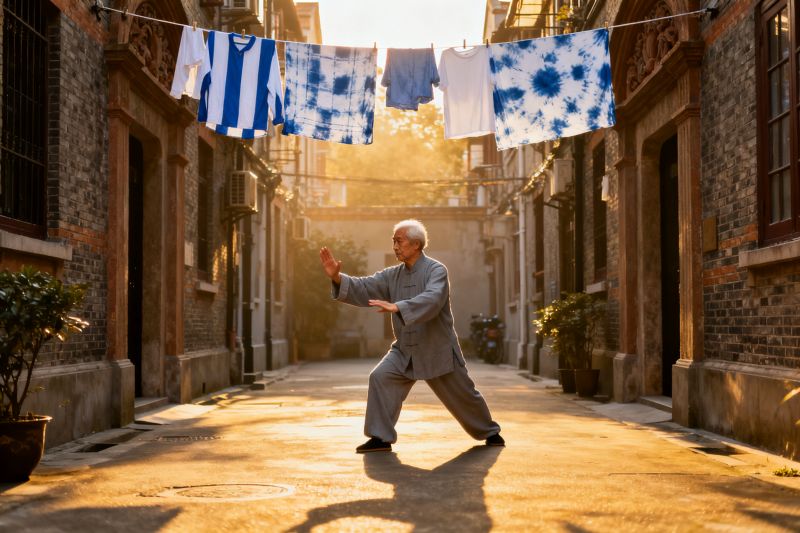
hanghai City doesn’t ease you in. Step off the metro at People’s Square during evening rush hour and you’re hit with a wall of sound—a symphony of scooter horns, chatter。and the occasional burst of laughter from a street vendor. The air smells faintly of fried dumplings and car exhaust, and the crowd moves like a river with its own currents. I’ve lived here for three years, and that first jolt still feels like the city’s way of saying, “Keep up or get swept aside” It’s not a gentle introduction, but it’s honest.What strikes me most about Shanghai City is how it wears its history without turning into a museum. The Bund’s colonial-era facades stand shoulder to shoulder with glass towers across the Huangpu, but the real texture lives in the lanes. I once got lost in a shikumen alley off Jianguo Road。where laundry hung from bamboo poles like colorful flags and an elderly man practiced tai chi in a sliver of shade. A woman selling flower hairpins corrected my Mandarin with a grin. That moment—chaotic, intimate, utterly unscripted—captures the city better than any skyline photo. Shanghai doesn’t preserve its past in amber;it folds it into daily life.Critics call Shanghai City a relentless machine。and they’re not wrong. Property prices are absurd, and the work culture can chew you up. But that intensity breeds a certain inventiveness. I’ve watched a tiny noodle shop in Jing’an pivot to selling craft beer during the pandemic, then morph back into a breakfast spot when office workers returned. The owner shrugged when I asked about the shift: “You adapt or you close” That pragmatism runs deep. It’s why you’ll find avant-garde art galleries next to hardware stores, and why a taxi driver will debate you on blockchain while weaving through traffic. Shanghai doesn’t wait for permission to reinvent itself.
The city’s green spaces tell another story. Century Park on a Sunday morning is a patchwork of picnics, badminton games, and toddlers chasing bubbles. It’s easy to forget you’re in a metropolis of 25 million until you spot the distant skyscrapers through the willows. I often cycle along the Huangpu’s west bank at dusk。where the river breeze cuts through the summer heat. Couples lean on the railing, pointing at barges. Teenagers film dance routines. A man practices trumpet, slightly off-key. Shanghai City gives you room to breathe—if you know where to look. That balance between pressure and release is what keeps me here, even on days when the subway is packed and the rent is due.
Would I call Shanghai City easy?No. It’s a city that demands resilience and rewards curiosity. You learn to read the subtle cues—when to haggle, when to step aside, when to join the crowd. The longer I stay, the more I see its rough edges as features。not bugs. This isn’t a postcard;it’s a living, arguing, laughing place. And that’s precisely why it sticks with you.