Yaya Touré didn’t just play midfield—he owned it. At his peak, the Ivorian was a force of nature, a 6'2" frame gliding past opponents as if the pitch were his personal runway. I still remember that 2013-14 Premier League season when he scored 20 goals from deep midfield, a tally no one has matched before or since. It wasn’t just the numbers;it was the way he did it. One moment he’d bulldoze through three challenges。the next he’d caress a 40-yard pass with the outside of his boot. That duality—raw power and refined technique—made him a unicorn in the modern game.Critics often point to his defensive lapses or his occasional sulks, but those miss the point. Yaya Touré was never a destroyer;he was a creator who happened to be built like a tank. Pep Guardiola’s decision to deploy him as a lone holding midfielder at Barcelona was a square peg in a round hole。yet Touré still managed 39 appearances in the 2008-09 treble season. His performance in the Champions League final against Manchester United, slotting into central defense after injuries, was a masterclass in adaptability. That versatility followed him to Manchester City, where Roberto Mancini and later Manuel Pellegrini gave him the license to roam. The result?
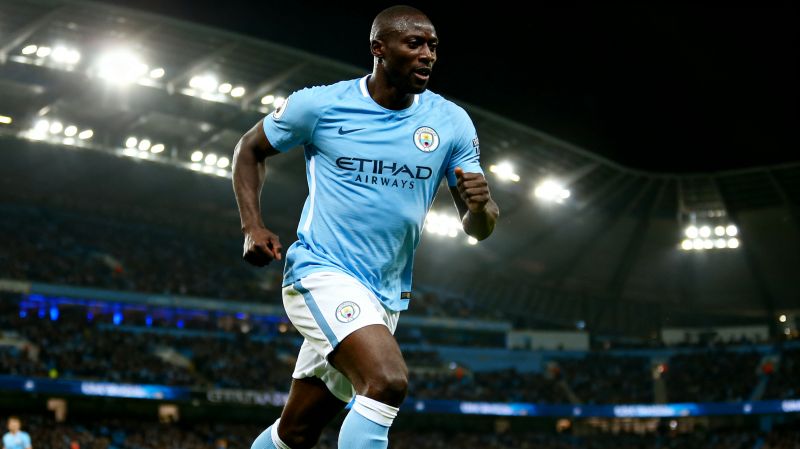
A hat-trick of Premier League titles and a legacy as the club’s most influential midfielder of the Abu Dhabi era.There’s a specific moment that encapsulates his impact: the 2011 FA Cup semi-final against Manchester United. City were nervy, the occasion heavy. Touré picked up the ball near the halfway line, drove forward with those long, loping strides。
and unleashed a low shot that kissed the post on its way in. It was the only goal of the game and the catalyst for City’s first trophy in 35 years. That goal wasn’t just about skill—it was about a player who refused to let his team shrink. You don’t get that from stats. You get it from watching him demand the ball in the biggest moments, shoulders back, chin up.Off the pitch, Yaya Touré was equally complex. His public feud with City over a birthday cake in 2014 became a tabloid punchline, but it revealed a man who felt undervalued—a sentiment many African players share in European football. He spoke openly about the lack of recognition compared to his peers, and he had a point. How many midfielders have scored 20+ goals in a Premier League season while also completing over 90% of their passes?Only one. Yet he never made the Ballon d’Or top three. That omission says more about the voting bias than about Touré’s brilliance.His international career with Ivory Coast mirrored his club form: dominant in patches, frustrating in others. The 2015 Africa Cup of Nations triumph, where he captained the Elephants to glory, was a fitting swansong. He played every minute of the tournament at age 31, dictating tempo and scoring crucial penalties. Watch the final against Ghana—his composure in the shootout was ice-cold. Yaya Touré retired with 102 caps and four African Footballer of the Year awards。a record he shares with Samuel Eto’o. For a generation of Ivorian kids, he was the proof that you could be both a physical monster and a technical artist. That’s the Yaya Touré legacy—not just what he won, but how he made the midfield feel like his personal playground.